“Young people are recognizing that the problems we inherited are now ours. For example, the process of hereditary transmission has become significantly shorter due to COVID.”
Prin, a college student and food justice advocate, tells me this as we sit on a bright orange bench at the community farm where we work in Philadelphia. She says the work she does on the farm to support Black food sovereignty was “essential” before the pandemic, and always will be. Communities of color, like hers, already faced systemic environmental and health injustices that have only been exacerbated by COVID-19 .
However, Prin says, the pandemic has sparked a renewed sense of urgency. Young people are “stepping up to do their part with their families,” especially now that everyone is at home. Many of her friends ask her how growing food relates to social justice and environmental sustainability, which, she says with a smile, is good for her YouTube channel and for the planet.
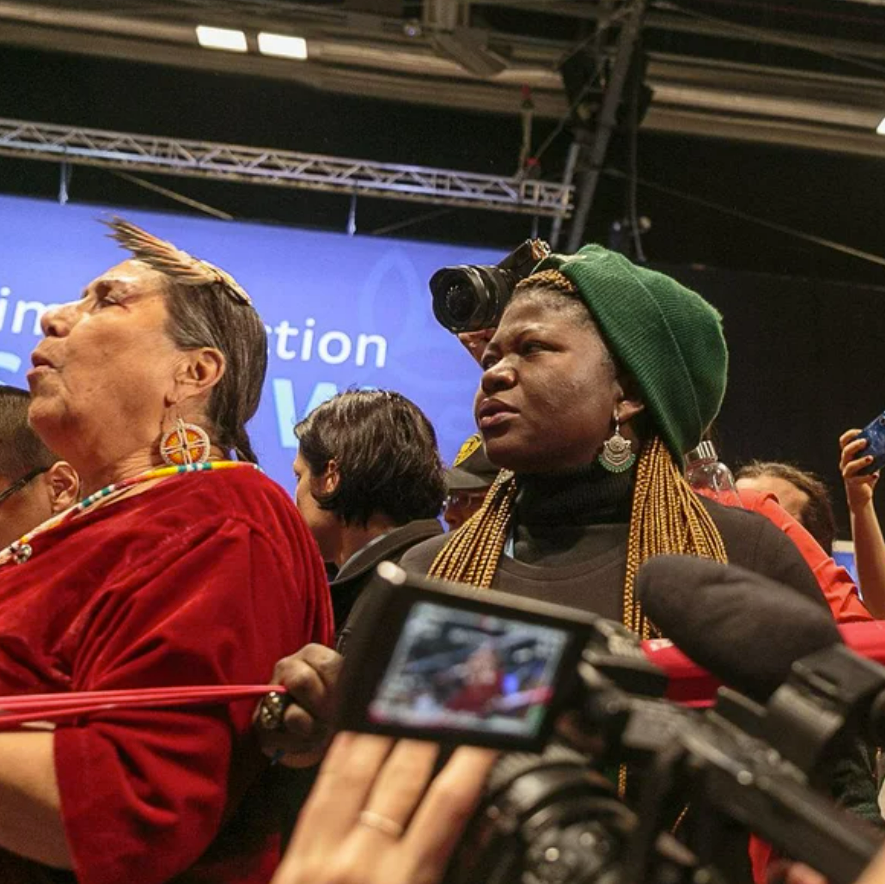
Prin is part of a generation of young people motivated to ensure they have a future to lead. Like the four million young people who took to the streets for climate strikes, Prin is working to secure a healthier, safer, and fairer future for herself and her community.
However, to what extent should young people bear this burden?
An excessive focus on youth agency can place unnecessary pressure on a group already facing significant challenges due to high risks of experiencing food insecurity , poverty, mental health challenges , environmental health hazards , and climate anxiety . Educators and researchers like myself are concerned not only about future harm resulting from climate change but also about current stressors that can cause lasting damage during a critical developmental period in young people’s lives.
So, as we talk, I ask Prin how she connects with the family and community that support her. “For example, through jokes,” she says. She laughs and recalls the wise jokes people used to make at family gatherings, like, “If everything on your plate is the same color, you’re doing something wrong.”
Despite significant efforts, families similar to Prin’s continue to experience higher rates of food insecurity in the U.S., regardless of whether overall population levels rise or fall . Furthermore, the paradox of simultaneous increases in global hunger and obesity rates disproportionately affects communities of color, who are more likely to be exposed to contamination from industrial food production, more likely to be exploited in the food system workforce, and less likely to be able to afford nutritious food as prices rise. Addressing these systemic inequalities requires more than simply teaching people to “eat healthy.”
Prin came to the farm to learn more about the history of food and land in this country, which had “like four or five little shops” on her way to school as a child, even though she lived only 10 minutes away. However, through her work on the farm, she is learning not only about the problems her generation is “inheriting,” but also about the tools and resources left behind by those who came before her.
Shoulders of giants
Hear more from the author on our podcast
Studies have shown that young people are more engaged in learning when communities and families are involved . These approaches can also help address inequalities embedded in our education system, stemming from a lack of concerted investment and discriminatory practices that simultaneously create dependency and deprive low-income and communities of color of resources. Family and community engagement also helps to make visible the mechanisms needed to improve students’ social-emotional functioning and their literacy and math skills .
As homeschooling and distance learning rates increase due to the pandemic, understanding how young people work with their communities to build on ancestral knowledge can be an important step towards ensuring a fairer and more sustainable future.
Building intergenerational coalitions
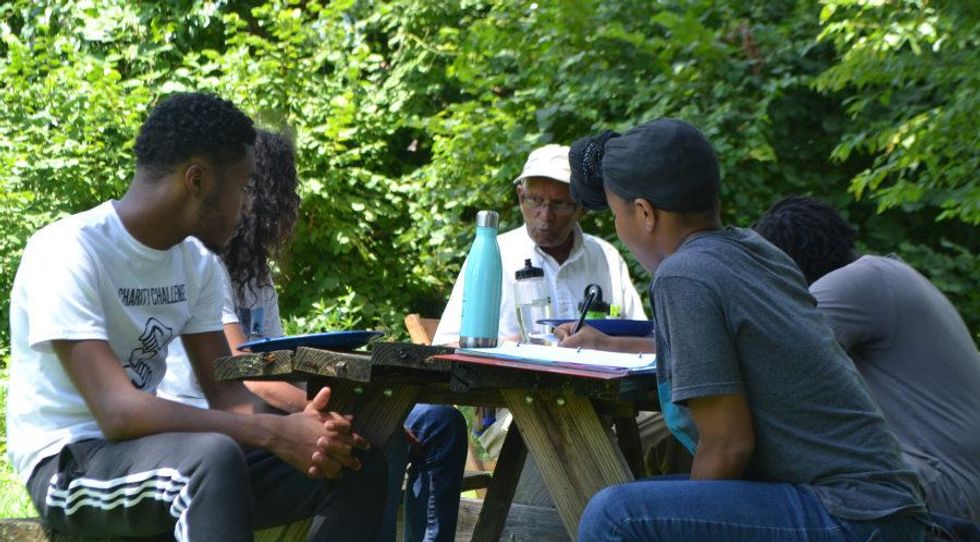
- 1. What is already known and understood ? I begin with the premise of Dr. Robin Wall Kimmerer, who reminds us in Braiding Sweetgrass that “doing science with awe and humility is a powerful act of reciprocity.” For me, this means partnering with community organizations like the Southwest and West Agricultural Group to design research questions that are relevant to their work with youth. It means charting convergent and divergent goals, interests, and methods in these collaborations, and it means remembering that just because knowledge isn’t expressed in a way that might be recognizable to me doesn’t mean it isn’t there.
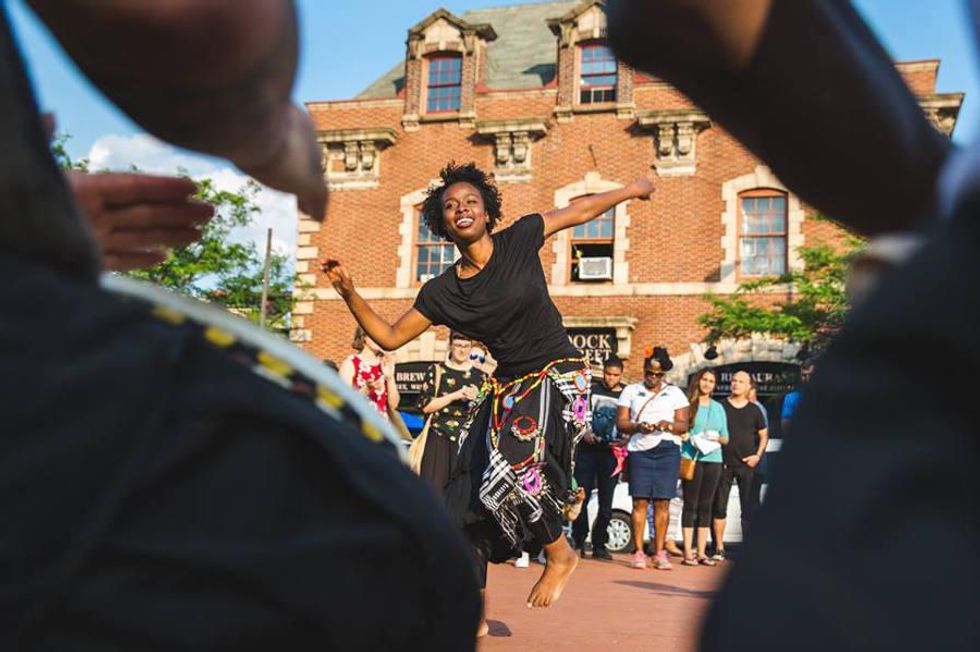
- 2. How are different modes of expression used to activate ancestral knowledge? For me, it’s through dance. West African dance, more specifically, has been an important aspect of my experience with intergenerational learning and food justice, as many of the dances are derived from food preparation and cultivation practices. In *History Dances *, Dr. Ofosuwa Abiola highlights the ways in which the natural bodily movements of everyday tasks, such as cultivating, cooking, and harvesting, helped inform Mandinka dance systems and even the modern West African dance vocabulary. When I dance, there is space for my whole being—body, spirit, mind, emotion—in the fusion of movements informed by my unique experiences with movements inspired by the traditional knowledge archived through dance. The energy that drove my ancestors to grow, nurture, cultivate, resist, persist, and share is in these movements. I give thanks and try to transmit that energy in my teaching, in my research, in my writing , and in my movement.
- 3. How can tension be productive? Asking people to delve into their past can be uncomfortable, but it can also help deepen the learning experience. When I was encouraging my students on the Navajo Reservation to pursue their goal of writing a bilingual Navajo-English play, a parent asked me to instead focus on teaching English to better prepare the students for English-predominant colleges and careers. This parent’s concerns were valid and very common among older generations of community members, especially those who had lived through the era of Indian Boarding School and who had been told for decades that their language and culture were worthless. This is not unlike the experiences of some of the young people I now work with on the farm. They have community members who do not view the return of young people of color to the land as desirable. Rather, they see it as a reminder of the exploitation of Black and mixed-race bodies in this country in the pursuit of agricultural and economic gain, and as a regression to a way of life from which many elders fought to break free. These are the kinds of tensions that compel us to confront ruptures in our past so that they do not persist in our future.
Ensuring responsibility
As Sankofa Farm co-director Chris Bolden-Newsome points out, “ To heal, we have to go back to the scene of the crime .” Whether the “crime” took place on farmland or in language and literacy classrooms, the communities that suffer the most from the lingering effects are often not the perpetrators and should not be solely responsible for rectifying the situation. Despite the power of intergenerational collective action, community-based coalitions cannot do this work alone. It is up to policymakers and decision-makers to support this work.
Youth leaders like Prin are not just asking to be heard; they are asking today’s leaders to act in ways that don’t render their efforts obsolete. As we consider how best to support them, it is important that we elevate the contributions of young people to intergenerational efforts and hold decision-makers and policymakers accountable for ensuring intergenerational environmental justice and health equity .
When it comes to coalitions for environmental justice, advocating for legislation that supports and protects ancestral knowledge and land, and that provides resources and infrastructure for young people to build upon these platforms , are important steps.
Prin is working towards this future; “For example, my story… if I told it more and got more attention on this issue, more funding for these social programs, more students could be on the farm and receive funding. And I feel this immense responsibility to do my part.”
Young people around the world are taking on these immense responsibilities. We need policies and programs that take their stories seriously and strengthen the intergenerational coalitions that support them.
Header photo: Young students in Navajo, New Mexico, signing a banner made by older students to promote cultural and environmental awareness. (Credit: OreOluwa Badaki)