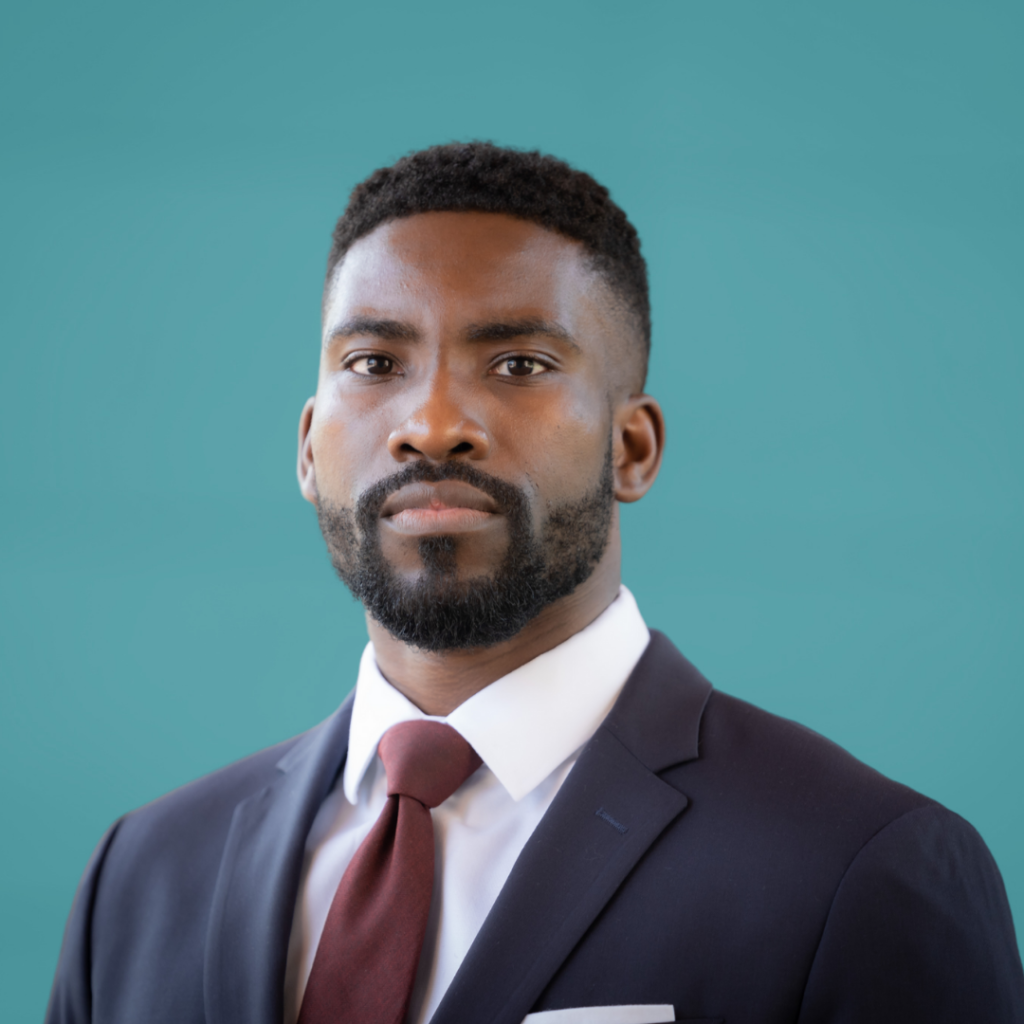
I remember the feeling of inexperience, possibility, and responsibility as I sat with my classmates at Harvard’s Tosteson Center for Medical Education in 2012, each of us staring at a blank sheet of paper.
As one of our first assignments in medical school, we were tasked with writing a letter to ourselves that we would open—four, five, or, in my case, nine years later—just before graduation.
What could I say to an older, more experienced, and more self-aware version of myself, who held the titles of Doctor of Medicine (MD) and Doctor of Philosophy (PhD)?
I gathered some ideas, wrote them down, put the letter in a sealed envelope, and delivered it. A week later, I had completely forgotten about the letter.
Last March, all graduating medical students received an email informing us that each of us would receive our letter just in time for Match Day, the day when medical students across the country find out where they have been placed for their residency training.
Now, as I feel ready to open this written time capsule, I reflect on the journey that has brought me to this point. Since writing that letter, I have become even more aware of the privileges I have received and the responsibility entrusted to me. People confide their lives in me, and I see many at their most vulnerable. I have strived to gain knowledge at the intersection of research, policy, and medicine because I want to treat illnesses while simultaneously promoting community health and highlighting the current systems that allow certain groups to bear the brunt of environmental exposures and other ills.
Throughout my training, I have worked to preserve what first inspired my career, and continues to guide and inspire my work: people.
Higher education at the service of communities
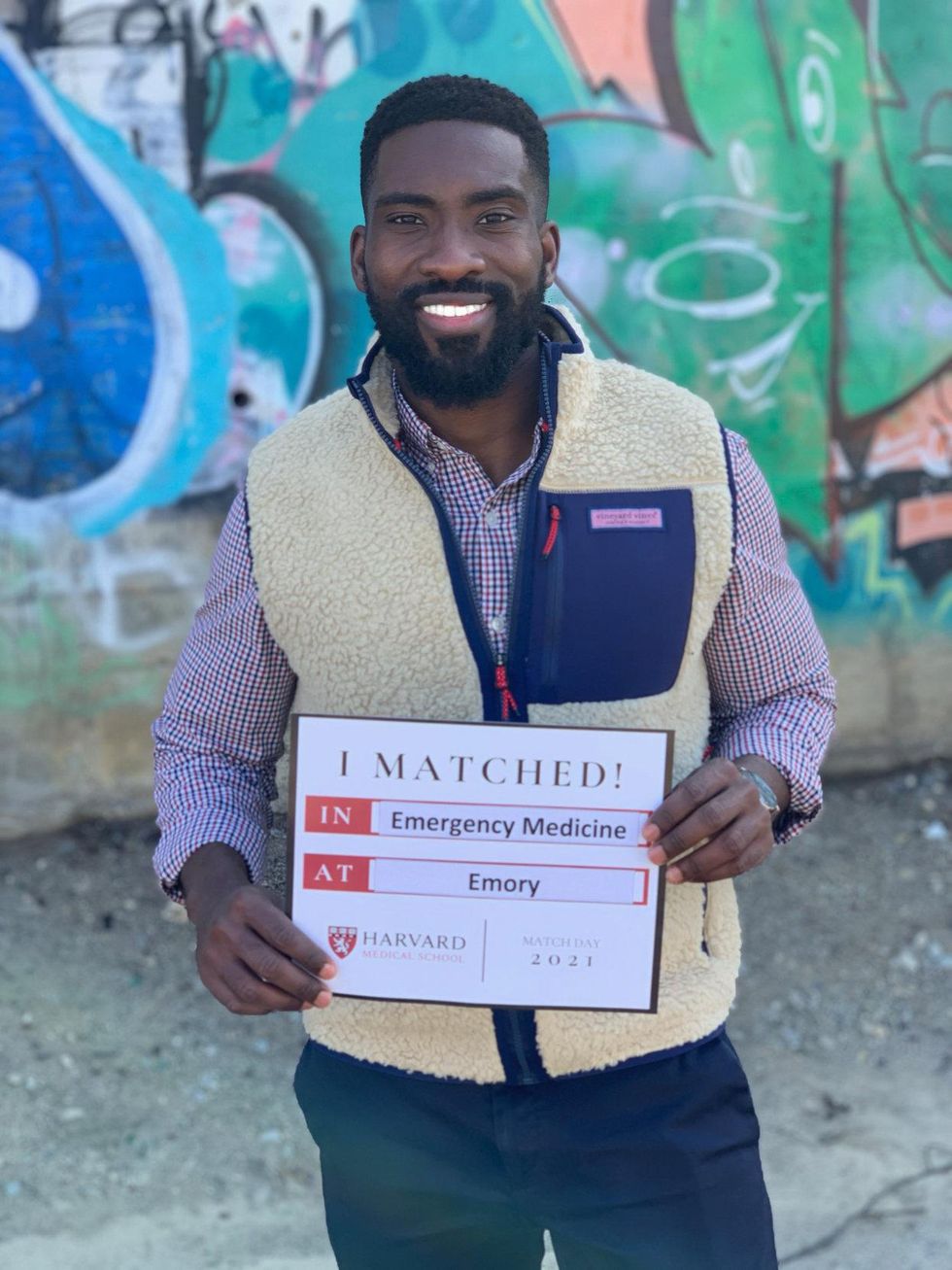
Match Day and the residency application process were demanding. I was in a constant state of self-reflection.
I reflected on my own immigration story, moving from Nigeria to North Carolina with my parents when I was a baby. My parents immigrated to the United States hoping to obtain an education to improve their family, their community, and the world. From a young age, I, too, embraced the principle of “higher education for service to the community.”
Observing sick family members, community members, and friends in Nigeria and the United States gave me an early appreciation for global health disparities and inspired my pursuit of medicine. I entered Morehouse College, the nation’s only historically Black male liberal arts college, intending to study medicine. However, through the Hopps Scholars program and other initiatives, I fell in love with scientific research. I came to appreciate that, by informing and advancing public health practices and clinical care, research has unlimited potential to help people. After graduating, I enrolled at Harvard to become a physician-scientist.
Each of my patients in medical school was a “life teacher” who taught me unforgettable lessons about how their health was often intertwined with social factors, including the environments in which they lived. It’s difficult to treat a girl’s asthma or a young man’s depression without considering the air quality in their neighborhood or the safety of their home. I learned to see the people, not just their illnesses.
In my doctoral research, I studied the relationship between human health and outdoor air pollution. I focused on working with biomarkers, molecular indicators that can help us better detect harmful environmental exposures. The sooner we can detect the damage, the sooner we can intervene—potentially before individuals become ill.
In my postdoctoral work at UC Berkeley, I added approaches to my curriculum to better appreciate the social systems embedded in environmental exposures. Whether we’re talking about metals in water or air pollution, these exposures don’t simply appear and encounter people in isolation. They encounter people in the places where they live, eat, play, and work. For example, when someone is exposed to harmful levels of lead, it’s likely through drinking water, old paint, or contaminated soil. Therefore, studying the harmful effects of lead on these individuals is incomplete without also considering their water sources, their homes, and their neighborhoods. Understanding this interconnectedness is especially important when it comes to preventing further harm. Just as I care for patients beyond their illness, through my science, I work to see people and communities, not just data.
I also completed a master’s degree in public policy to develop skills in areas such as negotiation, stakeholder analysis, and implementation. As the COVID-19 pandemic has reminded us, science does not operate in a silo. Scientific discoveries, including those in public health, need the attention and buy-in of those working in areas such as business and government to fully benefit the public.
This may seem like a lot of studying, but every step was focused on being an effective change agent in the real world. These investments were made with the hope that, when I face real challenges, the practice will have made me better—though not perfect—and I can confidently respond to any call to service.
“In support” of the communities
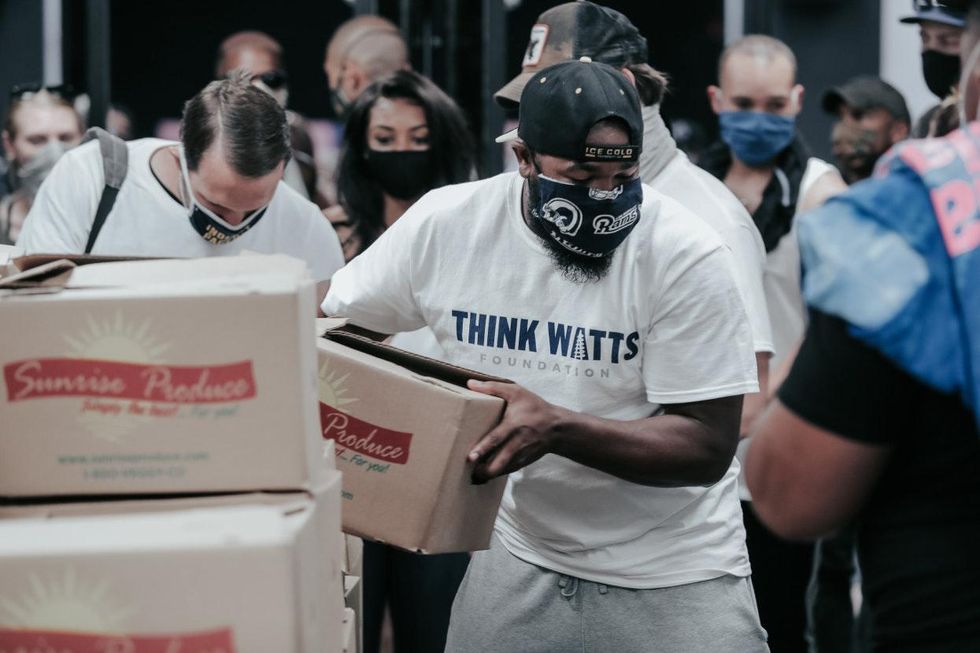
Just as the residency interview process was wrapping up, I received invitations to give research talks. I focused one of the talks on the idea of ”supporting communities.”
I asked listeners to think of a time when they had received support from a community. I also asked them to think of a time when they had supported a community. Then, I asked them to hold both ideas together; this is what it means to be supportive of communities.
My entire personal and professional journey has been about supporting communities. Family members, community members, instructors, patients, and many others sacrificed to make my journey possible. And they continue to support me. For example, if it weren’t for the exposure to research, graduate school visits, and other experiences I had as a Hopps Scholar at Morehouse College, I might not have pursued doctoral training. If it weren’t for the health disparities I observed in communities in North Carolina and southeastern Nigeria, I might not have pursued medical training. If it weren’t for the shortcomings in healthcare systems and the lack of diversity and inclusion in research that I became aware of through my doctoral training, I might not have pursued political training.
This particular presentation also provided me with a real-time opportunity to support my community. Toward the end of the presentation, I received a question from a Black student that reminded me of the importance of representation in the field of environmental health.
Student: “I know that for many of us who want to pursue an academic career, it’s sometimes difficult to find institutions and spaces that are willing to listen to our stories, and sometimes you can get stuck doing research that may not necessarily interest you or affect you personally. But you seem to do a good job of relating your experience to your research. Can you tell us a little about how you do it?”
In response, I said, “When you go back and reflect on things, it’s like, ‘Oh, this fits here and here,’ but while you’re going through those steps, it’s not that simple… I would say don’t get frustrated at first. Learning basic research skills and building your own insight helps nonetheless. Once you’ve consolidated yourself, you can change course and directly look for things that fit your story or experiences.”
Serving communities through emergency medicine
After years of training, and reflecting on how I can use it to better serve those most in need, I headed to the emergency room.
When most people think of emergency medicine, they think of ambulances, sirens, and bloody trauma. However, emergency rooms also serve as a safety net for many vulnerable population groups (people without primary care, without health insurance, patients without follow-up medical care). While it’s not ideal for an emergency room to serve this purpose, these patients still arrive and need help.
Many of these same people are disproportionately affected by healthcare failures and health disparities worldwide. They bear a disproportionate burden of toxic exposures and other environmental injustices. They are disenfranchised by racism and other forms of systemic oppression in our society. Again, these people exist beyond their illnesses, and for their treatment to be truly effective, it must be holistic, which may require medicine, research, and political solutions.
Many of these same people are disproportionately affected by healthcare system failures and health disparities worldwide. They bear a disproportionate burden of toxic exposures and other environmental injustices. They are disenfranchised by racism and other forms of systemic oppression in our society. Again, these people exist beyond their illnesses, and for their treatment to be truly effective, it must be holistic, which may require medicine, research, and political solutions.
For this reason, emergency services are an ideal place to continue learning, advocating, and serving others with my skills.
“You have a duty to help everyone”
On March 19, 2021, I was thrilled and grateful to learn that I would be a resident physician in the Department of Emergency Medicine at Emory.
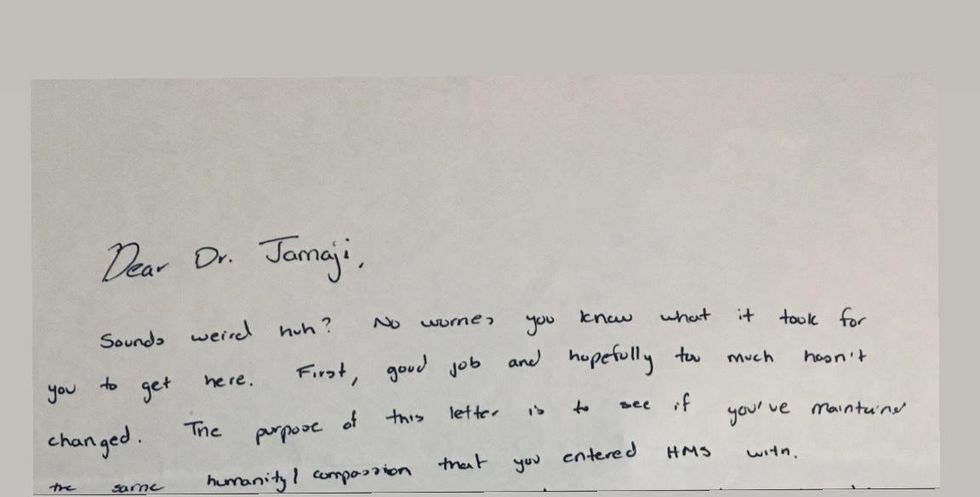
I also opened my letter from nine years ago. I wondered if I would recognize myself in it. And I did.
“Dear Dr. Jamaji,
Sounds strange, doesn’t it? Don’t worry, you know what it’s taken to get here. First of all, good work, and I hope you haven’t changed too much. The purpose of this letter is to see if you’ve maintained the same humanity and compassion you had when you entered HMS. It’s not all about you, and I want to make sure you never forget that. Starting your life as a doctor, you have a duty to help everyone. Maintain your strong relationship with God, as He has made everything possible. Also, never stop being a mentor. Always remember the importance of nurturing the future. Very few succeed and are given the opportunities you have, so NEVER FORGET THAT.
Live, Love, Laugh,
Jamaji August 30, 2012 1:27 PM TMEC Amphitheater
As I transition into my new role, I carry these words, my experiences, and everything I’ve learned with me.
There is much work to be done to make the world more equitable. I remain energized and committed to doing my part and working with communities to help create a healthier and more equitable future.